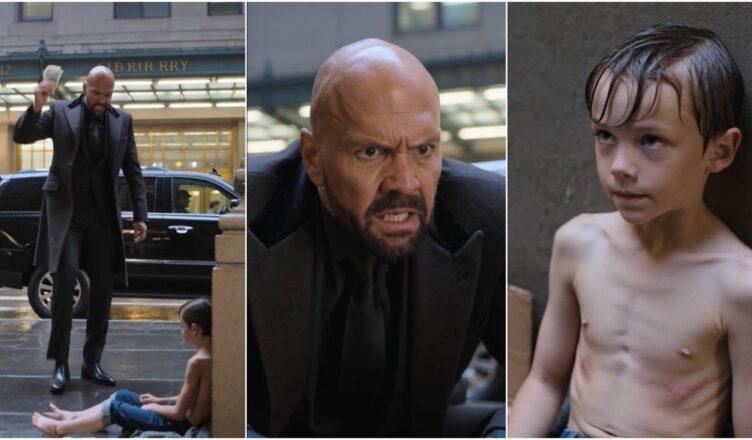
The Boy Outside Ashbury Station
The rain had stopped ten minutes earlier, but Chicago still looked soaked through.
Streetlights glowed yellow against the wet pavement. Taxis hissed past the curb, throwing dirty water into the gutters. Wind cut between the buildings with a November sharpness that made people lower their heads and walk faster.
No one wanted to look too closely at anyone else.
That was one of the first things Daniel Mercer learned after he became rich.
People in expensive coats looked through the poor the same way poor people looked through bad weather. Not because they didn’t see it. Because seeing it meant admitting it existed.
And Daniel had spent half his life pretending he no longer belonged to anything that could hurt him.
He stepped out of a black SUV outside Ashbury Station, a renovated old train terminal on the edge of downtown that now housed restaurants, offices, and a private club where men like him shook hands over numbers that could erase neighborhoods.
At thirty-nine, Daniel was one of the youngest investment firm founders in Chicago. Mercer Capital owned apartment complexes, warehouses, medical office parks, and enough failing businesses to turn desperation into profit. Magazines called him disciplined. Ruthless. Brilliant.
They never called him hungry.
He preferred it that way.
His driver opened the door. Daniel stepped onto the rain-soaked sidewalk in a tailored charcoal wool overcoat, black suit, polished shoes, and a luxury watch that caught the yellow streetlight when he checked his phone.
Six missed calls.
Three from his assistant.
Two from his general counsel.
One from his partner, Grant Lawson.
Daniel frowned.
Grant never called unless money was burning somewhere.
He was about to call back when he noticed the boy.
He sat against the stone wall near the glowing brass-and-glass entrance of Ashbury Station, almost swallowed by the shadow beneath the old arch. He couldn’t have been more than eight. Very thin. Pale. Bare chest exposed to the cold. Dirty jeans rolled at the ankles. Bare feet flat against the wet pavement. Damp brown hair stuck to his forehead, and bruised-looking ribs showed whenever he breathed.
Beside him lay a torn gray blanket.
A cardboard sign leaned against the wall near his knee.
HUNGRY.
People moved around him without slowing down.
A woman dropped coins near him without looking at his face. A man in a wool coat stepped over his bare foot like it was trash on the sidewalk. Two college kids glanced at him, whispered something, and hurried away.
The boy didn’t react.
He just sat there, calm and still, watching the city with eyes that looked far too old for his face.
Daniel should have kept walking.
He had a meeting upstairs. A room full of investors waiting. A private elevator. A table near the windows. A glass of good Scotch he would barely taste while men thanked him for saving their money by destroying someone else’s.
Instead, he stopped.
Maybe it was guilt.
Maybe it was the cameras outside the station.
Maybe it was the boy’s silence.
Daniel reached into his wallet and pulled out several bills. Not carefully. Not kindly. He walked toward the child with the impatient disgust of a man already regretting his own generosity.
Then he threw the money down at the boy’s feet.
Not handed it.
Threw it.
The bills hit the wet pavement and curled slightly against the dirty water.
Daniel glared down at him.
“Here. Buy yourself some food.”
The boy looked at the money.
Then calmly lifted his eyes to Daniel.
“Keep it.”
Daniel blinked.
The boy’s voice was soft, but clear. Not shy. Not grateful. Not frightened.
Daniel’s face tightened.
“You don’t want money?”
The boy remained still.
“You’ll need it soon.”
The cold mist moved between them.
Daniel leaned closer, irritation beginning to curdle into unease.
“What did you say?”
The boy stared directly at him with sad certainty.
“You’re about to lose everything.”
For a second, Daniel could not move.
Then his pride came rushing back, hot and ugly.
He straightened.
“You homeless kids give financial advice now?”
The boy said nothing.
Daniel looked down at the crumpled bills near the child’s bare foot.
“Take it.”
Micah shook his head.
“Keep it,” he repeated. “It won’t be enough.”
Daniel crouched in front of him, anger sharpening his face.
“Do you know who I am?”
The boy looked at him with a sadness so direct it felt almost insulting.
“Yes.”
Before Daniel could answer, his phone rang.
Grant Lawson.
Daniel stood slowly, still staring at the boy, and answered.
“Where the hell have you been?”
For one second, there was only static and breath.
Then Grant’s voice came through, thin and panicked.
“Daniel, listen to me. You need to leave the building.”
Daniel turned slightly toward the station entrance.
“What?”
“The documents are out.”
“What documents?”
“All of them.”
Daniel’s expression hardened. “Speak clearly.”
“The transfers. The shell loans. The pension fund leverage. Everything from Eastbrook. Someone leaked the internal files to the Tribune, the SEC, and the attorney general.”
Daniel stopped moving.
Cold moved through him, deeper than the wind.
“That’s impossible.”
“It’s everywhere,” Grant said. “Every network is picking it up. Federal investigators froze the company accounts fifteen minutes ago.”
Daniel looked through the brass-and-glass doors of Ashbury Station. Inside, screens above the lobby flashed with news feeds. At first, he saw only moving color.
Then he saw his own face.
MERCER CAPITAL UNDER FEDERAL INVESTIGATION.
His throat tightened.
“Grant,” he said quietly, “where are you?”
A pause.
Too long.
“I’m sorry.”
Daniel understood before the line went dead.
His hand dropped slowly from his ear.
The city noise seemed to stretch away from him. Taxis. Horns. Footsteps. Rainwater sliding into drains. People were turning now, checking their phones, recognizing his face from the breaking news.
His assistant called again.
Then his general counsel.
Then a board member.
Daniel ignored them all.
He turned back toward the boy.
The child sat exactly where he had been, knees drawn up, eerie eyes fixed on Daniel as if he had been waiting for this moment all night.
Daniel walked back slowly.
“How did you know?” he asked.
The boy didn’t answer.
Daniel crouched, ruining the crease in his trousers in a puddle of dirty water.
“How did you know that was going to happen?”
The boy tilted his head.
“Do you remember Ashbury House?”
The words struck Daniel harder than the phone call.
Ashbury House.
Not the station. Not the renovated terminal with restaurants and polished brass signs.
The shelter.
The old one.
Before the fire.
Before the lawsuits.
Before the building was sold, restored, renamed, and turned into a place where wealthy people drank cocktails above the spot where children used to sleep on gym mats.
Daniel’s mouth went dry.
“How do you know that name?”
The boy looked past him, toward the stone building.
“You slept near the radiator in the back room,” he said. “Even when it didn’t work.”
Daniel stood too fast.
Nobody knew that.
Nobody in his current life.
Not Grant. Not his investors. Not the journalists who wrote about him with words like self-made and visionary. They knew he had “grown up poor.” That was the approved version. Clean. Inspirational. Useful.
They didn’t know about Ashbury House.
They didn’t know about the smell of bleach and old blankets. The soup served too thin. The night staff who locked the storage pantry because hungry kids stole crackers. The boys who learned to sleep with their shoes under their shirts so no one took them.
Daniel stared at the child.
“Who are you?”
The boy lowered his eyes.
“You really forgot me.”
Daniel felt something old and terrible shift beneath his ribs.
A memory surfaced.
Not clearly at first.
A small boy with brown hair. Bare feet. Always cold. Always coughing into the sleeve of a sweatshirt too big for him.
Daniel had been fifteen then. Angry. Starving. Convinced the world owed him nothing and therefore he owed it nothing back.
But there had been one child at Ashbury who followed him everywhere.
Micah.
That was his name.
Micah with the cracked blue cup.
Micah who never asked for food directly but watched Daniel’s tray until Daniel broke his bread in half and pretended not to notice him taking it.
Micah who believed every promise because he was too young to know promises were often just pretty lies adults used to leave faster.
Daniel took a step back.
“No.”
The boy looked up.
“You promised.”
Daniel’s chest tightened.
The fire came back in pieces.
January.
Below zero.
The shelter packed beyond capacity because the city had run out of beds. The heat had failed, but the director refused to close because inspections meant fines, and fines meant losing funding.
That night, someone locked the side exits.
To keep people from sneaking in.
To keep people from sneaking out.
Daniel remembered waking to smoke.
Not an alarm.
Smoke.
Someone screaming near the kitchen.
Children coughing.
The lights gone red through haze.
He remembered grabbing his shoes. Crawling. Heat against his face. A hand clutching his ankle.
Micah.
Pinned under a fallen section of wooden shelving near the storage room.
“Danny,” he had cried. “Help me.”
Daniel had pulled once.
Twice.
The smoke got thicker.
Someone shouted that the roof was catching.
Daniel saw the broken window near the laundry room. Saw people climbing through it. Saw a way out.
“I’ll come back,” he told Micah.
He meant it when he said it.
That was what haunted him.
He crawled through the window into the snow, coughing, bleeding, half blind.
Then the building groaned behind him.
Flames burst through the side wall.
People were screaming. Sirens were coming. Someone wrapped a blanket around Daniel’s shoulders. A firefighter pushed him back when he tried to move toward the shelter.
Or maybe Daniel only told himself that later.
Maybe he never tried.
Micah died that night.
At least, that was what the newspapers said.
Five children dead in Ashbury House fire.
Daniel kept the clipping for two years, then burned it in a trash can behind his first apartment because guilt was not useful and usefulness was the only religion he had left.
Now the boy sat in front of him, unchanged.
Eight years old forever.
Bare chest.
Bruised ribs.
Damp hair.
Eyes too calm.
Daniel’s voice broke.
“Micah?”
The boy gave him a small, sad smile.
The kind children give adults when they are disappointed but not surprised.
Daniel shook his head. “You died.”
“Maybe.”
The word slipped between them and vanished into the cold.
Daniel looked around wildly.
People were still moving past. Some had stopped to stare at him. A man across the street held up a phone, recording. No one seemed to see the impossible part. No one seemed to understand that Daniel Mercer was kneeling in front of a dead child outside a building full of ghosts.
“What do you want from me?” Daniel whispered.
“Nothing.”
“That’s not true.”
Micah looked toward the bills still lying on the wet pavement.
“You give money like it can keep you from feeling things.”
Daniel looked down at the cash.
The bills looked obscene now.
“You became rich,” Micah said softly. “But you didn’t become safe. You became the kind of man we used to hide from.”
Daniel flinched.
His phone buzzed again.
This time a news alert lit the screen.
MERCER CAPITAL ACCUSED OF PROFITING FROM EVICTIONS, PENSION LOSSES, AND FRAUDULENT ACQUISITIONS.
Images flashed in his mind.
Apartment buildings bought cheap, rents doubled, families pushed out before winter.
Factory workers whose retirement fund he had leveraged to finance a deal.
A medical supply company gutted and sold for parts while employees cried in the parking lot holding cardboard boxes.
He had told himself it was business.
Efficiency.
Market correction.
The same kind of clean language adults had used after Ashbury burned.
Faulty wiring.
Administrative oversight.
Tragic failure.
Never cruelty.
Never greed.
Never people choosing profit over children.
Daniel lowered himself onto the wet sidewalk beside Micah.
For the first time in twenty-four years, he did not care who saw him.
“I was scared,” he said.
Micah looked at him.
“I know.”
“I was fifteen.”
“I know.”
“I thought if I went back, I’d die too.”
Micah’s face remained still.
Daniel pressed one hand over his mouth.
The sob came anyway.
“I should have come back.”
The boy looked toward the station entrance.
Above the doors, the new gold letters read ASHBURY EXCHANGE.
A building renamed so thoroughly it could pretend nothing had burned there.
“You did come back,” Micah said.
Daniel looked at him through tears.
“No. I didn’t.”
“You came back rich.”
The words were not cruel.
That made them worse.
Daniel wiped his face with the heel of his hand.
“What am I supposed to do?”
Micah stood.
He pulled the torn gray blanket over his shoulders.
“You still have time.”
“To do what?”
“To stop running through the window.”
A bus roared past them, throwing up a wall of dirty water between the curb and the street.
Daniel blinked against the spray.
When the bus moved on, Micah was gone.
Daniel shot to his feet.
“Micah!”
People turned.
A woman hurried away from him.
A man in a business suit muttered, “Jesus,” and crossed the street.
Daniel looked everywhere. The station entrance. The alley. The steps leading down to the train platform. Nothing.
Only the cardboard sign remained on the wet pavement.
Daniel picked it up with shaking hands.
The word HUNGRY was gone.
In its place, written in the same black marker, were four words.
NOT TOO LATE YET.
Daniel stood under the yellow streetlight, holding the sign while his empire collapsed on every screen in America.
By midnight, his accounts were frozen.
By morning, Grant Lawson was arrested at O’Hare trying to board a flight to Dubai under a false name.
By the end of the week, Mercer Capital had become a national scandal. Reporters waited outside Daniel’s penthouse. Investors sued. Partners vanished. Former employees came forward. Families his firm had displaced stood in front of cameras and spoke the names of children who had slept in cars because Daniel’s company had turned their homes into assets.
His attorneys told him to say nothing.
His crisis team told him to show remorse without admitting liability.
His board told him to resign temporarily and let them “protect the brand.”
Daniel listened to all of them.
Then he fired them.
The first real thing he did was walk into the federal building with a box of internal documents and a lawyer who looked terrified to be near him. He gave investigators everything. The shell companies. The illegal transfers. Grant’s emails. His own signatures.
Especially his own signatures.
When the prosecutor asked why, Daniel looked at the polished conference table between them and thought of a boy under a collapsed shelf, waiting for someone who never came.
“Because I helped build the fire,” he said.
The second thing he did was harder.
He went to Ashbury Exchange and bought the building back at a price so unreasonable the current owners accepted before the lawyers finished pretending to negotiate.
Then he shut it down.
The private club closed first. Then the restaurants. Then the offices.
Wealthy men complained about leases and inconvenience.
Daniel did not answer any of them.
Six months later, construction began.
Not another luxury development.
Not another investment property with a bronze plaque and a tax write-off.
A shelter.
A real one.
Beds with doors that locked from the inside. A medical clinic. Legal aid offices. Hot meals. Job placement. Mental health care. A floor reserved for children and teenagers with staff trained to protect them, not punish them for needing protection.
At the entrance, Daniel installed no portrait of himself.
Only a small black stone wall with five names carved into it.
Micah Bell was the third.
The day the new Ashbury House opened, snow fell lightly over Chicago.
Daniel stood near the doorway in a plain black coat, thinner than he had been before, older somehow. His fortune was mostly gone. Some of it taken by lawsuits. Some surrendered to restitution funds. Some poured into places he should have cared about long before a dead child found him in the rain.
A reporter called out, “Mr. Mercer, do you see this as redemption?”
Daniel stopped.
For years, he would have known how to answer that. Something polished. Something useful. Something that sounded humble while protecting him from shame.
Instead, he looked at the stone wall.
“No,” he said. “Redemption is not something you announce at a ribbon cutting.”
The reporter tried again. “Then what is this?”
Daniel looked toward the front doors, where a young mother carried a sleeping toddler inside out of the cold.
“A start,” he said.
That night, after the cameras left, Daniel stayed behind.
He walked through the shelter slowly. Past the dining room where volunteers served stew. Past the clinic where a nurse laughed with an old man whose hands shook too badly to hold a pen. Past the children’s floor, where a boy in oversized pajamas sat on a bed with a dinosaur book open in his lap.
Near midnight, Daniel stepped outside.
The street was quiet.
The station lights glowed softly against the snow.
For a moment, he thought he saw him.
Across the street, beneath the old lamp.
A small boy with a torn gray blanket over his shoulders.
Daniel didn’t move.
Neither did the boy.
Then Micah lifted one hand.
Not a wave.
Not forgiveness.
Something smaller.
Something enough.
Daniel closed his eyes.
When he opened them, the sidewalk was empty.
Years later, people would tell the story in cleaner ways.
A disgraced billionaire lost everything and became a philanthropist.
A ruthless investor found his conscience.
A ruined man rebuilt a shelter where a tragedy once happened.
They would leave out the cold. The fire. The child under the shelving. The money Daniel threw because he no longer knew how to offer anything human.
They would leave out the truth.
Daniel did not change because he became good.
He changed because one night, outside Ashbury Station, a boy he had abandoned looked him in the eye and gave him the one thing Daniel had never given himself.
A chance to go back.