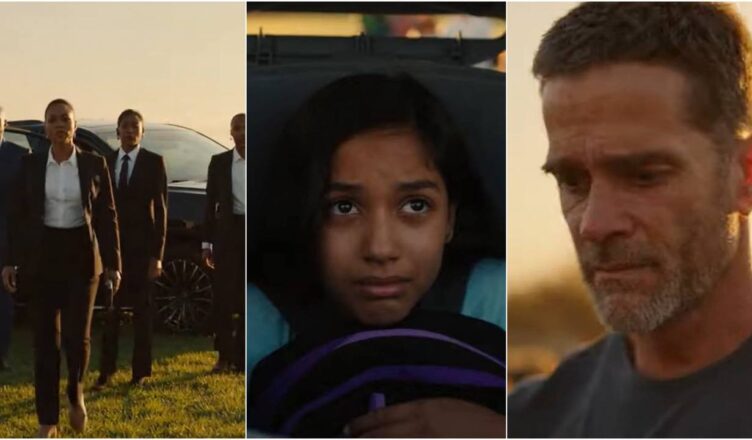
CHAPTER 1 — THE CALL
The only phone I kept in a fireproof safe screamed with a ringtone I hadn’t heard in five years—static, harsh, impossible to ignore. That line existed for one reason: if it ever rang, it meant the perimeter around my daughter had been breached.
I was in my garage, sanding a half-finished birdhouse Maya and I had started on a quiet Sunday. Pine dust, varnish, sunlight—my careful little theater of normal life. The life I’d built to replace the one that almost swallowed me. The life where I was Jack Rourke, suburban dad, not Orion, the name the intelligence community had erased.
Blocked caller. Zeros. My hand went cold as I answered.
“Rourke.”
Principal Davies from Cypress Creek Middle sounded like a man choking on his own panic. “Mr. Rourke… you need to come. Now. There’s an incident.”
“Define incident,” I snapped. “Is Maya safe? Three words.”
A pause. A breath. “It’s public. It’s escalating. The Mayor’s son is involved. And… the Sheriff is here, but they’re not helping. They’re protecting them.”
Public. Escalating. Mayor’s son. Sheriff protecting them.
The words didn’t form a story. They formed a pattern I’d seen a hundred times: power abuses the weak, then hides behind badges and titles.
I grabbed my keys and ran. My hand flicked toward the hidden compartment in the wall—the one with the biometric lock, the one that held the things I’d sworn never to touch again. I stopped myself. Not yet. I had to see it before I turned my life into a war zone.
The drive was a smear of perfect lawns and golden retrievers. Threat assessments began running on autopilot: exits, choke points, response time, who controlled what. Sheriff Brody ran this town like a personal fiefdom. His son Cole was one of the boys who’d been circling Maya since we moved here. This wasn’t going to be a simple “dad shows up and fixes it.”
I slammed into the drop-off lane and climbed out.
The schoolyard wasn’t chaos.
It was worse.
It was a spectacle.
CHAPTER 2 — THE DUMPSTER
On the athletic field, students formed a tight semicircle—silent, heads bowed not in shame but in devotion to their phones. Dozens of screens pointed at something in the center like an altar.
Then I saw it.
A huge gray municipal dumpster—cafeteria refuse, grime, peeling stickers. Its lid was cinched shut with a thick rusted chain and a cheap padlock. A boy in a designer backpack—Drew Peterson, the Mayor’s son—leaned on it like it was his property. He tapped the metal with a lacrosse stick, casual, bored.
And the dumpster was moving.
They were rolling it across the asphalt.
Inside it, something thumped. A muffled cry scraped through steel.
I caught one flash—pale fingers pressed to the tiny ventilation grate—before the container lurched over a rut and the hand disappeared.
My vision tunneled. The garage, the birdhouse, the civilized life—gone. There was only the target and my daughter’s fear.
I vaulted the fence and charged.
Students scattered, startled by the speed of me. Drew didn’t move. He smiled like consequence was a myth.
“Back off, old man,” he called. “It’s just a prank. She’ll be fine. A little smelly.”
Fifty feet away Sheriff Brody stood with a radio, blocking teachers and bystanders like a bouncer. He wasn’t stopping it. He was managing it. When he met my eyes, his expression said: Welcome to our town.
“Get away from that dumpster,” I said. My voice wasn’t loud. It was flat—like the last click before a weapon fires.
Drew laughed. “What’s the matter? Can’t take a joke? She deserves it. The freak—”
I hit him before the word finished. Not a punch—a trained tackle that removed him from the problem. He flew backward, slammed into turf, wheezing.
I grabbed the chain and pulled until my shoulders screamed. Rusted links didn’t give. The padlock held. Inside, the thumps became frantic, desperate.
“Call an ambulance, Rourke!” Brody shouted as he ambled closer, smug. “You just assaulted a minor. I’m booking you.”
“You watched them do this,” I snapped. “Arrest me after I get her out.”
“Step away from the container,” he warned, hand drifting toward his sidearm.
That was the moment my past leaned close and whispered: You can’t stay Jack today.
Then the ground began to vibrate.
A low, subsonic rumble swallowed the cicadas. A shadow cut across the field like a sudden eclipse.
Students turned, phones tilting toward the entrance.
Three black SUVs tore into the faculty lot—armored, blackout windows, aggressive. Not police. Not FBI. Something quieter, harder. They crushed hedges and signs and stopped in a perfect semicircle, sealing the dumpster away from Brody and everyone else.
Doors opened in sync. Six figures in dark gray tactical gear stepped out, faces hidden behind polarized lenses, moving like a single organism.
One of them—a woman with a severe ponytail and a headset—walked straight to me.
“Orion,” she said, voice flat and synthesized. “You are secure. We have the extraction tool. Stand back.”
The Sheriff’s jaw fell open at the name.
Mine didn’t. I already knew what it meant.
Ghost Protocol.
The fail-safe I’d prayed would die unused.
CHAPTER 3 — GHOSTS IN DAYLIGHT
The team flowed around the locals as if they were furniture. Two agents positioned between Brody and the dumpster. Another moved toward Drew and the other boys. Not arresting them—nullifying them.
The tool arrived: a compact, battery-powered industrial cutter, designed to shear hardened steel without the drama.
Brody puffed up. “This is an unauthorized military operation! Show me identification!”
The woman finally looked at him the way you look at a barking dog you might have to put down.
“Sheriff Brody. Your jurisdiction is temporarily superseded. Step away from the protected asset.”
Asset.
The word made me flinch. Maya wasn’t an asset. She was my daughter.
The cutter whined. The padlock snapped. The chain dropped.
The lid opened and the stench of spoiled food and rust poured out. I reached in.
“Maya.”
She was curled at the bottom, shaking, streaked with grime, clutching a torn piece of cardboard like it could protect her. Her eyes—smart, brave, twelve-years-old—were huge with terror and disbelief at the sudden invasion of ghosts.
I lifted her out and she clung to me, face buried in my shoulder. The weight of her humiliation felt heavier than any pack I’d carried in war.
“I’ve got you,” I whispered. “I’ve got you.”
The tactical woman touched my shoulder. “Orion, relocation is required. Mayor and Sheriff are compromised. Children’s involvement suggests linkage to your classified history.”
Around us, students kept filming, but their expression had changed. The old spectacle—the public execution of a quiet girl’s dignity—had been replaced by a new one: a town’s power structure being humiliated by forces it didn’t understand.
My quiet life didn’t crack.
It detonated.
CHAPTER 4 — KATHY
We were inside the lead Suburban within minutes. Soundproof cabin. Cold, sterile air. Bullet-resistant windows. The city outside felt unreal, like a movie playing without sound.
The woman drove fast, cutting through alleys.
Then, still moving, she removed her headset and sunglasses.
I recognized the eyes first—amber, sharp, tired.
“Kathy,” I said.
She gave a grim nod. “Jack. I wish this was a beer, not an extraction.”
Kathleen Vance. My former second-in-command. The only person alive who still knew how to wake the Ghost Protocol.
“How did the alert trigger?” I asked, holding Maya tight. She was quiet now, breathing against my chest.
“You didn’t trigger it,” Kathy said. “Maya did.”
My blood chilled. “What?”
“The compass charm you gave her. It isn’t a trinket. It’s a biometric, single-use distress beacon tied to a dark satellite network. It reads cortisol spikes and atmospheric pressure consistent with confinement. Forty seconds after that dumpster closed, we got the signal.”
I looked down. Maya’s fingers were wrapped around the tarnished silver compass on her backpack zipper. I’d told her it pointed to Daddy.
I’d never told her it could call ghosts.
“Why the Mayor? Why the Sheriff?” I asked. “This wasn’t random.”
Kathy’s face hardened. “We’ve had a surveillance request pending on them. Corruption pipeline—land grabs, kickbacks, maybe worse. But today… it looked targeted. Like they knew who you were and used her to send a message. Or to silence you.”
A sick truth settled in: I hadn’t escaped the game. I’d just built my house inside its shadow.
We rolled into an abandoned industrial park. The other SUVs locked down entrances. A hangar became a command center in minutes—screens, comms, maps.
Maya was placed in a small armored rest module with a medic. Safe. For now.
Kathy turned to me. “Command wants to know: do we do this clean, official… or do we do it the old way?”
The old way meant speed, pressure, leverage—no patience for courts that could be bought. It meant my civilian life would be ashes, permanently.
I smelled the faint, stubborn odor of garbage still in Maya’s hair.
“The official way takes months,” I said. “I don’t have months. I have hours.”
Kathy picked up the radio. “Command, this is Agent Kilo. Old Way is greenlit. Orion is active.”
The war was officially home.
CHAPTER 5 — THE FIRST STRIKE
Brody and Mayor Peterson moved fast, but not toward justice. Toward control. They fed local media a story: unidentified armed vigilantes assaulted minors and kidnapped a student. They tried to paint me as a violent former operative to pull state forces in and reclaim jurisdiction.
Kathy watched traffic and chatter on the screens. “They’re trying to make you the villain, Jack.”
“Let them,” I said, staring at the map of Cypress Creek like it was a target grid. “We just need to break their credibility before they scrub their tracks.”
“Their weakness is money,” Kathy said.
“And panic,” I answered. “Panic makes men sloppy.”
We dropped the first package: a single, verifiable wire transfer—Mayor’s private foundation to a shell company owned by the Sheriff’s wife—timed one day after a rezoning vote.
No story. Just proof.
Minutes later, local outlets stalled. National investigative reporters started sniffing. Tickers flashed: LOCAL MAYOR, SHERIFF IMPLICATED IN CORRUPTION.
Brody’s deputies hesitated. Loyalty cracked under the weight of federal attention. Their king’s crown suddenly looked like a noose.
But Maya’s trauma was the real clock.
Men like Peterson didn’t stop because they were shamed.
They stopped when they were buried.
CHAPTER 6 — MAYA’S TRUTH
I went to Maya’s module. Clean clothes now, blanket pulled to her chin, sedative softening the edges of fear. She was awake anyway—eyes fixed on the ceiling like she was trying to find a safe place in it.
“The bad people are gone,” I said. “They can’t hurt you anymore.”
She turned to me. Her voice was raspy. “Why, Dad?”
Not why did they do it.
Why did you let it get to me.
“It’s my fault,” I admitted. “My past.”
She shook her head. “They said I knew too much. They said if I didn’t keep quiet, I’d end up in the trash again.”
My stomach dropped. “What did you see, Maya?”
Her hands tightened around the blanket. “Last week… I was drawing by the creek near the abandoned warehouse—the one Mayor Peterson bought. I saw Sheriff Brody and men unloading huge crates. One broke open. I saw inside.”
She swallowed hard. “Guns. Military ones. And foreign writing on the crates. Brody yelled. And they all looked at me.”
The bullying snapped into focus. Not cruelty for sport.
Containment.
Neutralization of a witness.
Drew had been asking where she went after school, pushing her, testing her. The dumpster wasn’t a prank. It was a message: We can dispose of you.
I kissed her forehead. “You did the right thing. You just gave us what we need to end this.”
When I stood, the last soft pieces of Jack Rourke fell away.
Orion was all that remained.
CHAPTER 7 — THE WAREHOUSE
Kathy listened, eyes widening as the word “weapons” landed. “That’s not a scandal. That’s national security.”
“We don’t leak this,” I said. “We deliver it—proof, authenticated, unarguable.”
If we called in the Feds now, the site would get tipped, scrubbed, sanitized, buried. And Maya’s testimony would drown in procedure.
We moved first.
A micro-drone slipped into the warehouse through a vent. Grainy video filled the screen: stacks of crates, dust, dim light.
Then the camera zoomed.
Foreign markings. Military codes. A stamp tied to a known conflict zone.
Proof.
To clear the warehouse, we created a distraction: a credible threat sent through a hijacked frequency to the Mayor’s office. Brody panicked and diverted his best men to babysit his patron.
The warehouse became under-protected.
I geared up—Kevlar, sidearm, comms. Not to fight. To confirm and extract a physical piece: a serial plate, a manifest. Something that would survive any defense attorney’s theatrics.
Kathy touched my arm. “You don’t have to go.”
“I do,” I said. “If their security protocols exist, they were designed to stop me. And I want to end this loop with my own eyes.”
I moved into the night like a ghost returning to its old language.
CHAPTER 8 — ENDING THE LOOP
The breach was surgical. Small-town security was crude and lazy—cameras pointed the wrong way, doors secured by arrogance. Inside, the air smelled of packing material and oil. I documented everything: rifles, ordnance, manifests linking Peterson and Brody to a pipeline that stretched far beyond Cypress Creek.
On my way out, I saw them.
A deputy asleep in a folding chair, coffee cup on his chest.
And beside him—Drew Peterson, head bowed, asleep with a rifle in his arms like a child hugging a toy.
The boy who’d locked my daughter in trash.
For one second, every dark option opened in my mind.
I closed them.
I didn’t touch him.
I took a small engraved metal plate off a major crate—unassailable evidence—and disappeared.
Back at the hangar, Kathy assembled the full package: Maya’s testimony, drone footage, financial records, my physical evidence.
This time, the call went above local offices—straight to the Department of Justice’s National Security division.
“Package authenticated,” Kathy said. “Full disclosure protocol initiated.”
The response hit like a storm.
By midnight, real federal cars flooded Cypress Creek. Not our ghosts—official Marshals and investigators. Mayor Peterson was dragged from his house in a bathrobe while cameras rolled. Sheriff Brody was arrested in his own station, deputies watching as his badge was stripped away.
The narrative flipped. The “kidnapping” story died under the weight of weapons, manifests, and money trails.
The next afternoon, the town sat shell-shocked. The school closed. The field where Maya had been humiliated looked ordinary again—empty grass, bleachers, a sun that didn’t care.
Kathy stood by the hangar door, exhaustion finally visible. “They’re all detained. Charges against you are quashed. Drew and the other boys are in juvenile custody pending investigation.”
“And us?” I asked.
“The risk of blowback is low,” she said. “But your exposure is permanent. You can’t stay here, Jack. Not now.”
I nodded. The quiet life I’d built was ash.
But Maya was alive. Safe.
She stood beside me, turning the silver compass charm over in her fingers.
“Where do we go now, Dad?” she asked.
I lifted her into my arms and looked toward the light outside the hangar.
“Somewhere new,” I said. “Somewhere the only person who knows my real name is you. And we build the quiet life again.”
She took a breath—small, steady—and stepped into the sun.
The silence that followed wasn’t emptiness.
It was the sound of a mission completed… and the knowledge that the perimeter is never truly closed.
ADDENDUM — THE PRICE OF THE OLD WAY
While the town slept, the fallout spread outward like ink in water. The school board’s inbox flooded. Parents who had filmed the first “prank” deleted videos in panic, then realized it was already too late—copies existed everywhere, uploaded, shared, saved. Teachers who had stood frozen on the sidelines wrote statements to protect themselves, trying to explain why a dumpster and a chain had somehow become “something we couldn’t stop.” Inside the Sheriff’s department, deputies scrubbed messages and call logs, because every one of them could become evidence by morning.
Kathy kept moving pieces across screens. She wasn’t only fighting Peterson and Brody; she was preventing collateral damage. She pushed quiet warnings to state agencies so they wouldn’t stumble into the scene and compromise proof. She fed controlled facts to reporters who knew how to verify without tipping criminals. She arranged a child psychologist for Maya through channels so private I didn’t want to know their names. And she did something that reminded me why I’d trusted her with my life: she treated Maya like a child who’d been hurt, not a file number that needed to be relocated.
Watching it, I felt the same bitter truth I’d learned overseas: the clean path is a luxury. In places run by men like Brody, “procedure” is what they weaponize against you. They hide behind paperwork, then use the time it buys them to threaten witnesses, bury records, and ruin lives one quiet night at a time.
Before dawn, Maya finally slept—real sleep, deep and heavy, her breath evening out as if her body had decided it could stop fighting for a few hours. I sat in the doorway of her module and let myself replay every promise I’d made her about being safe here. I’d meant it. And still, my promise had cracked under a chain and a padlock.
When she woke, she didn’t cry. That scared me more. She asked for water. She asked where the birdhouse was. Then she asked, very softly, “Do you think they’ll do it to someone else?”
That question was the last bolt that locked my decision in place.
“No,” I told her. “Not if I can help it.”
Later, when the federal teams took over and our ghosts faded back into the dark, Kathy handed me a small folded page—an address, a time, and a name that wasn’t mine. A new identity package, already prepared because she knew me well enough to know I’d never truly stop needing exits.
“You’re going to hate this part,” she said.
“I already do,” I answered.
“Good,” she said. “Hate keeps you sharp. But don’t let it hollow you out. The mission ends, Jack. You have to let it end—at least enough to be her father again.”
We said goodbye like soldiers do—no speeches, no drama. Just a look that carried ten years of unspoken debt.
As we drove away, Maya rested her head against the window and watched Cypress Creek shrink behind us: the water tower, the school, the green lawns. A town that would tell itself stories for years about what happened on that field—how the Sheriff wasn’t really guilty, how the Mayor was set up, how a “federal team” had overreached. People rebuild the lie because the truth is too frightening: power can rot, and it can point its teeth at children.
Maya turned the compass charm once more and whispered, almost like a prayer, “It really did point to you.”
I squeezed her hand. “It always will,” I said. “And if the world ever tries to put you in a box again… it will learn what it means to wake the ghosts.”
Behind us, Cypress Creek was already becoming a crime scene. Ahead of us was nothing but road, sun, and the hard work of building quiet from the ruins—this time with our eyes open, and with the knowledge that safety isn’t a place. It’s a promise you keep, every day.
Maya fell asleep again with her fingers still around the compass. I watched the tiny rise and fall of her shoulders and understood the real cost: I could dismantle a ring, expose a mayor, ruin a sheriff—but I could never erase one afternoon from her memory. All I could do was make sure that fear was the last gift those men ever tried to hand her. Then I turned my eyes to the road, and I kept driving.